
URACE Career Simulator
It changes everything that comes after — the kart, the categories, the timeline, and how much of the ladder is realistically in front of them.
URACE Career Simulator
Three destinations, one ladder, eleven steps. Pick where you want to end up and we will walk you up the whole thing — what each step is, what it costs, and where we hand you over.
Not in the mood to play? Scroll down — the whole thing is written out below.
Career Plan · Orlando
Nobody is born on a grid. Every professional driver climbed a ladder, and every rung of it was paid for and earned. This page is that ladder, laid out end to end — from a simulator seat in Orlando to Formula 1, IndyCar or NASCAR. We run the bottom of it and we prepare drivers for the rest. Open any rung to see what it actually involves, what it costs, and what a driver has to do to leave it.
There’s one honest way to find out, and it isn’t a quiz. Put them in a real race kart with a coach watching, and read the data afterwards. One day tells us more than a year of wondering — and we’ll tell you what we actually saw, including when the answer is “they love it, and that’s enough”.
For Formula 1, honestly, yes: that route is built around drivers already karting at ten, and it closes in your teens. For racing, no. Stock cars and sports cars have no age-gated junior ladder, and Masters leagues exist precisely for drivers who started as adults. We coach adults and seven-year-olds on the same day, on the same circuit. The ladder asks whether you learn the technical way, not when you were born — and that is teachable at any age. And if you already race, you skip the simulator and the Academy entirely.
Three questions. The same three we ask every driver who calls us — they decide everything else.
Add rungs as you read them and this builds the actual budget — one-off costs on one side, monthly on the other. It’s the same arithmetic we do with a family on a call, except you can do it yourself first, with nobody selling at you.
Karting looks like a hobby from the outside. What it actually asks of a seven-year-old is to read a track, adjust a line, and make consequence-driven decisions at speed, over and over, for an hour. There are very few childhood activities that demand that much processing per second.
A large study published in PLOS One found sport’s overall impact on child development is strongly positive, including gains in self-esteem and communication. A separate study comparing competitive athletes to recreational and instructional-level peers found the competitive group scored significantly higher on cognitive skills and goal-setting. And researchers who study youth sport — including work out of Texas A&M — point to competition itself as a key driver of resilience: learning to lose a race, work out what went wrong, and come back faster teaches persistence in a way few other childhood activities do.
Every URACE session is built around that cycle. A coach doesn’t only teach a driving line — they walk the driver through onboard video and lap-time data, then set one specific target for next time. Goal, attempt, review, adjust. It happens to be happening at 50 mph.
We’re not claiming karting replaces school, coaching or therapy. We’re saying the driver who comes back to you is more focused, steadier under pressure and harder to rattle — and that part is yours to keep whether or not they ever reach a professional grid.
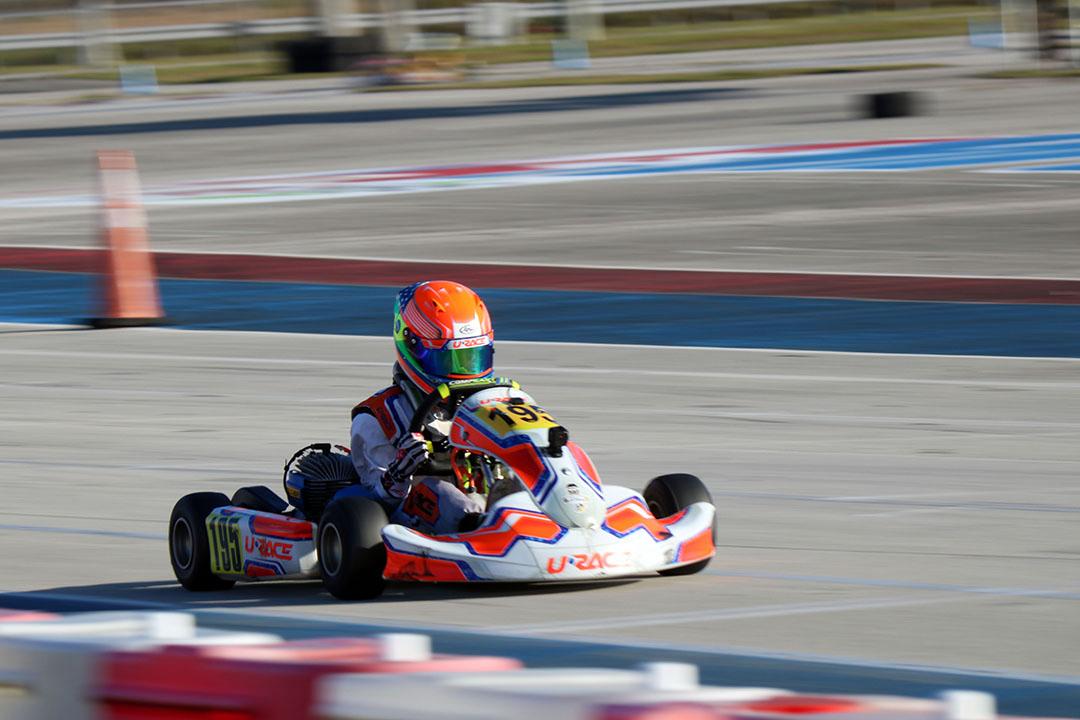
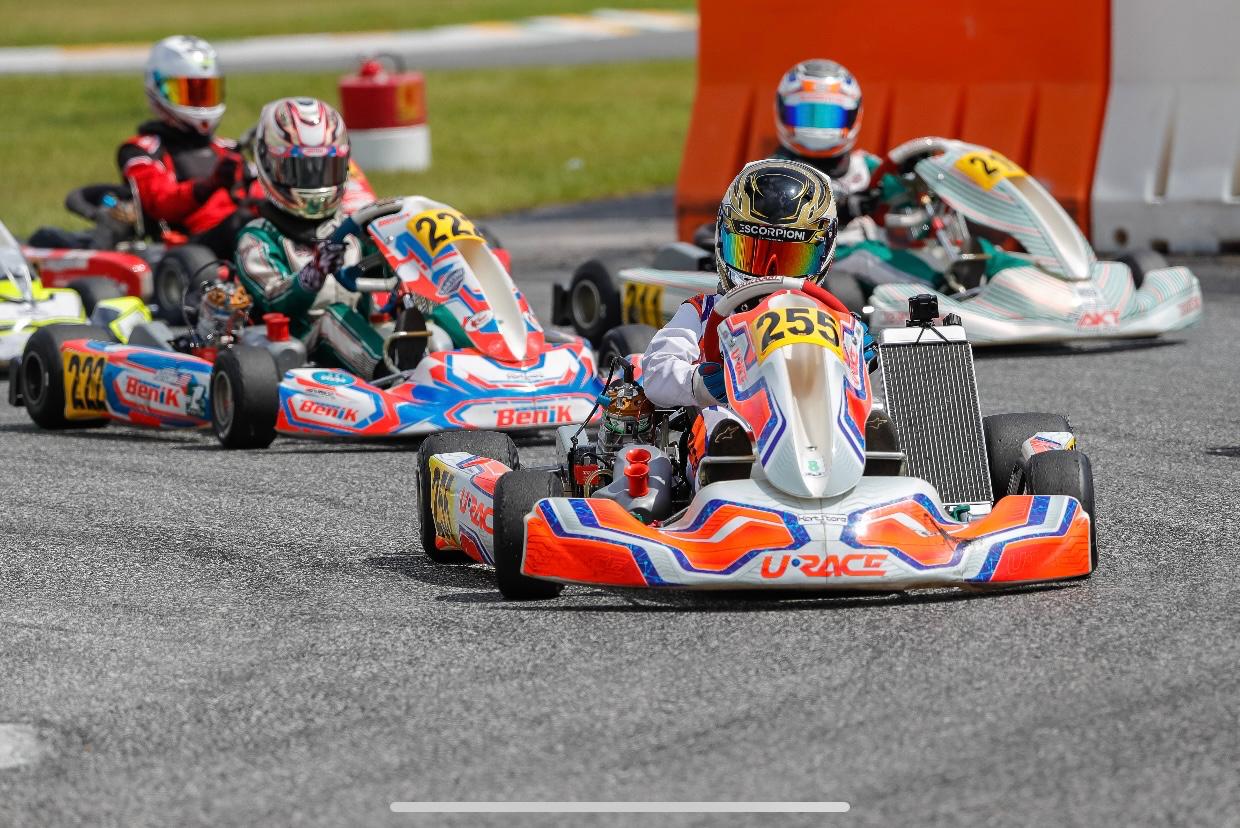
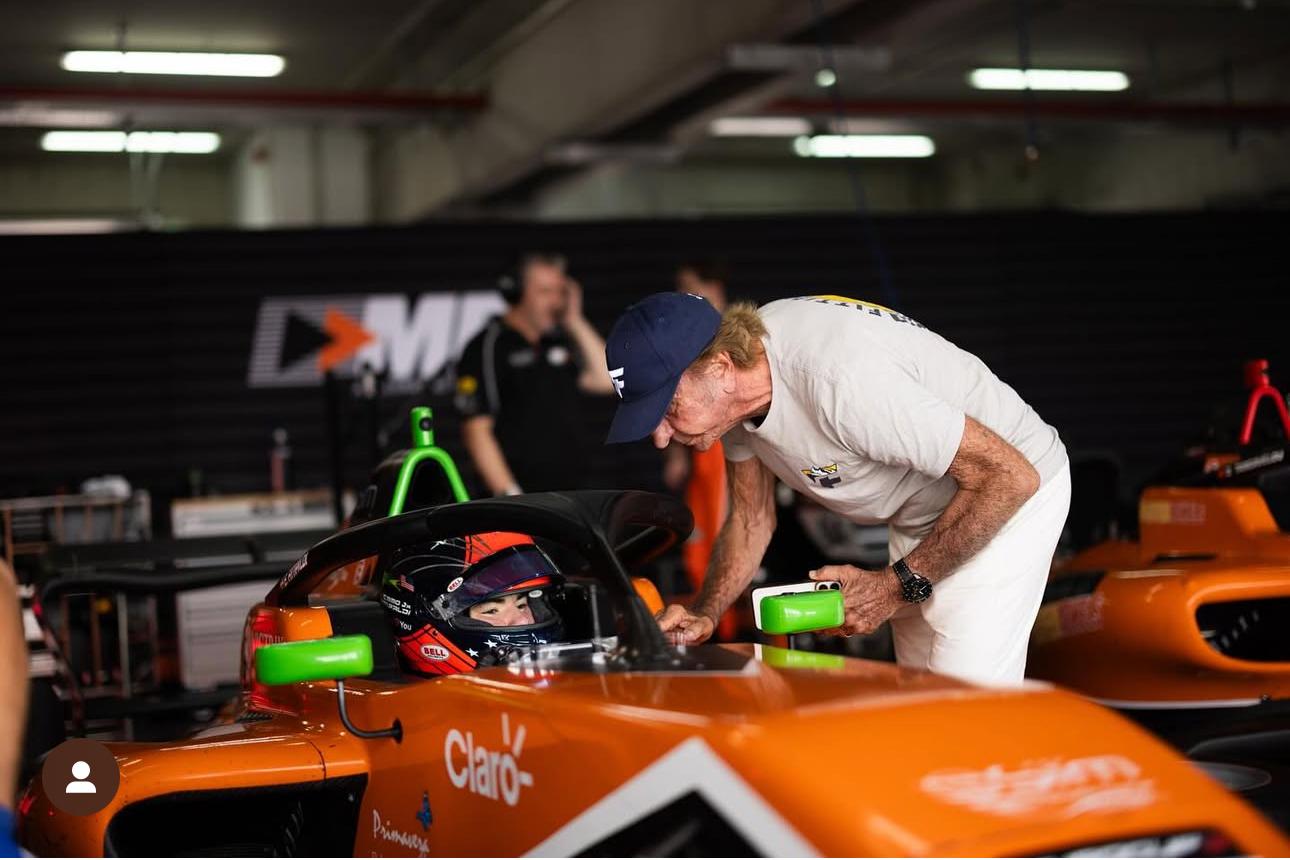
Most people who make a living in motorsport never drive for one. They engineer, they manage, they run teams, they handle the commercial side. A driver who understands that industry is worth more inside it — and has somewhere to go if the seat never comes.
So we teach the business alongside the driving. From the Academy onward a driver works with a career specialist, not only a coach. By the time they reach the Racing Team, the work is as much about building a professional as a lap time.
Helmet and livery design, team kit, the visual identity a driver carries from one category to the next.
How to talk to media, how to handle a bad weekend in public, and advisory for the driver and the family.
Building the channels, producing highlight reels and sponsor material that a brand can actually use.
Shaping the driver’s story and connecting it with brands once there’s a record worth presenting.
Which categories, which tracks, what it costs, and how it fits around school and family life.
Reading a contract, running a weekend, working with a mechanic and an engineer as a professional does.
Bring the whole group. Everyone drives a real race kart on a professional circuit, with our staff running the session start to finish. Birthdays, corporate days, team offsites. This one isn’t a development step — it’s a day out, and it’s meant to be.
Orlando Kart Center’s 8/10 mile professional kart racing track is your textbook. A challenging circuit, the variety of corners is the ideal training ground.
Urace is not the racetrack; we are a racing team that provides services to racers and enthusiasts using a third-party track. We must adhere to their rules and operating hours.
Crashes or damages caused by the driver are not included in the price. The program listed price is the Urace.us fee for kart rental and trackside support only. A deposit for incidentals will be collected the day before the event. The deposit is refunded in case of no incidents at the end of the event after deducting the 3.5% credit card processing fee.
Racing is a high-risk sports activity and environment. By booking this appointment, you agree and acknowledge that Urace.us is not responsible for any injuries, damages, or losses of any nature that may happen while on site.
Our service requires planning, preparation, coordination and transportation to the track on our end, for those reasons we cannot offer a refund. Rescheduling will be available with a minimum of 48h notice.
Rescheduling policy. If a class is rescheduled with less than 48 hours’ notice: a flat fee of $95 will be charged, and if a Driver Pass is required it will be charged additionally. To avoid this fee, we recommend notifying us of any changes at least 48 hours in advance.
Please note that if a training session needs to be rescheduled due to circumstances outside of URace’s control, a fee will be charged to cover our costs of preparation. This fee will be calculated based on the cost to reschedule the session and the amount of drivers involved. This fee will be in addition to any other costs associated with the session itself. By using URace’s services, you agree to this policy and understand that rescheduling fees may apply in the event of unforeseen circumstances.
Straight answers, including the ones that cost us a sale.
You start in a kart, you get coached, and you build a record that the next category will look at. There is no shortcut and no talent-spotting shortcut either — every professional on a grid today climbed the same kind of ladder, one paid rung at a time. What changes between drivers is how early they start, how good the coaching is, and how well the season is planned. The cheapest honest first move is a simulator hour or a single day in a race kart, because both tell you whether you want the next rung before you’ve spent anything serious.
From four years old a child can drive a Baby Kart and learn driving lines and fundamentals. From six to thirteen they fit a Kids Size Kart, and from eleven they can move into adult categories. Start with one day — a race kart, full gear, a coach watching — and let the coach and the data tell you whether there’s something there. Children under ten must be accompanied by an adult at the track. If they love it and want more, the Academy turns one good day into a monthly plan.
Lap time on day one tells you almost nothing. What a coach reads is how fast a driver corrects a mistake, whether they repeat it, and how they behave when the session goes badly. That’s visible within a few runs, and it’s visible in the data rather than in opinion. We’ll tell you what we saw honestly — including when the answer is that your child loves driving and isn’t a future professional, which is a perfectly good answer.
For Formula 1, almost certainly — that ladder is normally climbed from childhood. For racing itself, no. Masters karting categories exist precisely for adult drivers, and adults often learn the technical side faster than children because they can absorb data and theory. If your goal is to race competitively, be good, and enjoy it, age is not the barrier. If your goal is a professional seat, we’ll tell you straight what’s realistic.
At URACE the ladder starts at $60 for an hour in the simulator on your own, or $150 with a coach beside you. Twelve coached hours a month is $1,200. A full day in a real race kart — kart, gear and a coach all day — is $719. The Academy is $2,756.90 a month, dropping to $2,688.43 over three months and $2,619.06 over six. The circuit’s track fee is separate and paid to the Orlando Kart Center: $100–230 for a driver pass Wednesday to Friday, $100–125 Saturday and Sunday, and $22 for a spectator.
The stock car route leaves karting earlier than the open-wheel ones. A driver typically moves from karting into Legends or Bandolero cars, then regional Late Models, then the ARCA Menards Series, then NASCAR’s three national series in order: the Craftsman Truck Series, the Xfinity Series, and the Cup Series. Because the branch happens young, the decision about which destination you’re aiming at matters earlier than most families expect.
Through the Road to Indy, which is the most clearly defined ladder in motorsport: USF Juniors, then USF2000, then USF Pro 2000, then Indy NXT, then IndyCar. Each rung has a scholarship structure attached to winning it, which makes it the cheapest of the single-seater paths to a top-level seat — and the reason we map American drivers onto it early.
Karting, then Formula 4, then Formula Regional, then FIA Formula 3, then FIA Formula 2, then one of twenty seats in the world. It is the longest and most expensive of the three routes and the one where a karting record counts for most, which is why drivers aiming at it start young and race nationally as early as they can. Nobody can promise this rung. What can be promised is that every rung below it is real and that the climb is known.
For circuit knowledge, braking points and racecraft, yes — our own drivers learn a circuit on the simulator before they ever see it. A full motion cockpit loads the driver up in the corners and punishes the same mistakes a real car does. What it can’t teach is the physical load of a real race weekend, which is why it’s the first rung and not the only one. It is, though, the only rung with no track fee, no equipment and no weather.
We operate at the Orlando Kart Center, 10724 Cosmonaut Blvd, Orlando FL 32824 — an 8/10 mile professional kart circuit just off the Florida Turnpike, minutes from most of Orlando’s attractions. URACE is a racing team, not the racetrack: we provide coaching and programs at a third-party circuit and follow their rules and operating hours.
Tell us who the driver is and whether they’ve been in a race kart before. That one answer decides the rest — and we’ll tell you honestly where to start, even if it’s the cheapest rung on the ladder.
Talk to usURACE runs the four red rungs. The championships above them are run by their own organisers and governing bodies. URACE is not affiliated with, endorsed by or a partner of any of them — we prepare and enter drivers, nothing more.
URACE is not the racetrack. We are a racing team providing coaching and programs to racers and enthusiasts at the Orlando Kart Center, a third-party circuit, and we follow their rules and operating hours. Track fees are charged by the circuit, separately from URACE services: driver pass Wednesday to Friday $100–230, driver pass Saturday and Sunday $100–125, spectator pass any day $22. Extra guests must pay $15 each.


